Tudor House in Margate: Visiting Guide 2025
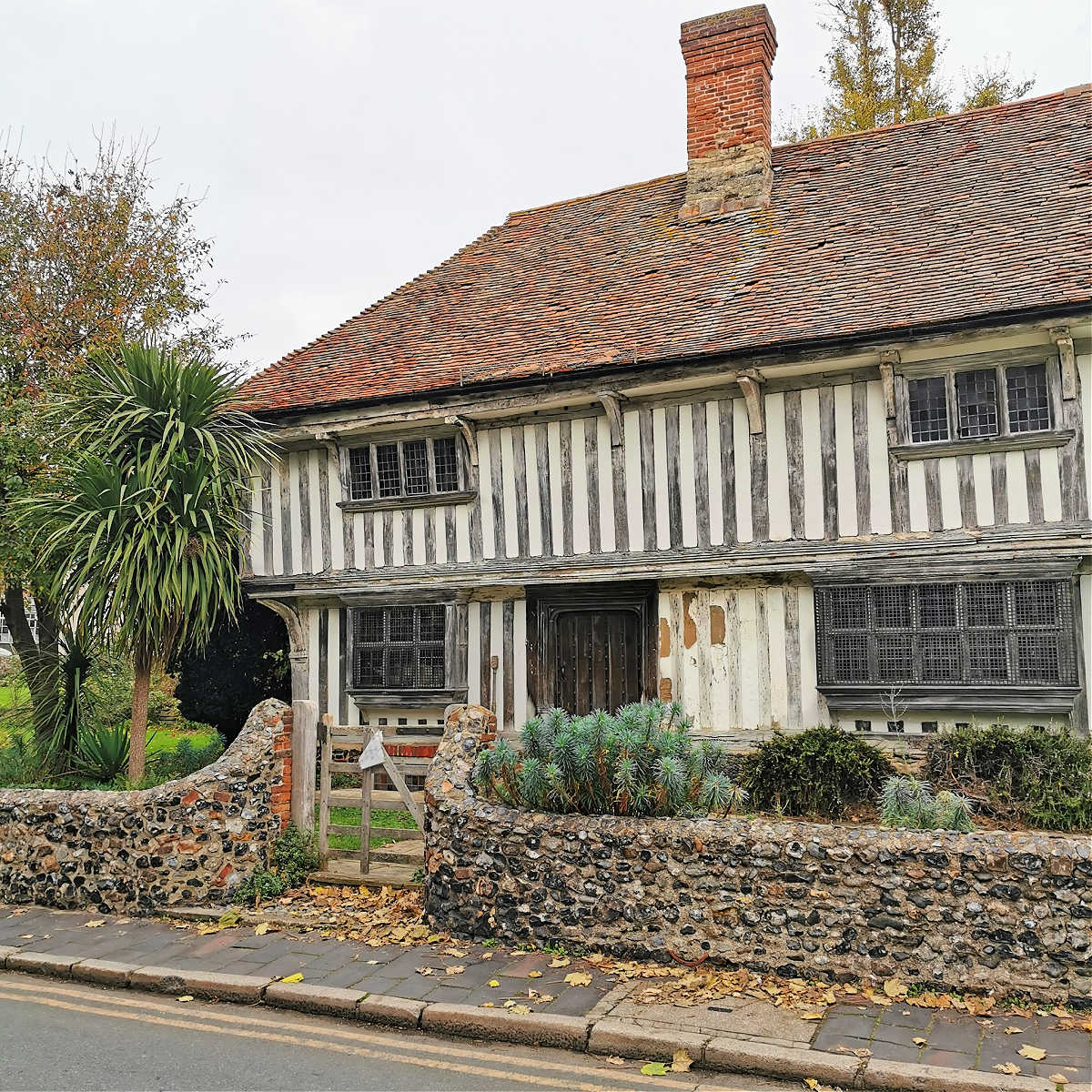
The Tudor House is the oldest building in Margate, built in 1525. It was originally a yeoman farmer’s house and is a unique example of a ‘transitional house’ bridging the gap between medieval open-hall houses and early-modern two storey houses.
The Tudor House had advanced features for its time, including glazed windows and two chimneys, which indicated its high status, as most houses then would have had just one chimney.
These days a visit to Margate has something for everyone. From the thrill of Dreamland’s retro rides to the esoteric appreciation of new exhibitions on offer at the Turner Gallery. With ever improving access from London, it’s a corner of Thanet that’s fast cornering the market in providing much more than just a grand day out.
But amongst the ever changing re-invention that so defines Margate at the moment, we decided to take a step back and take a look at the town’s oldest surviving building. The Tudor House in Margate.
Like Margate itself, The Tudor House, has successfully re-discovered itself and reclaimed its rightful place in the town’s proud heritage. With increased opening hours, don’t forget to pay it a visit and happily while away an hour or so, admiring its fine architecture and artefacts. Or just listen to Tudor music and let your imagination take you back in time.
We completed our trip to Margate with choc ices from Bernie’s and fish and chips from Peters, eaten outside by the beach.
MORE PLACES TO DISCOVER IN MARGATE
- Visiting the seaside town of Margate >>
- Visit the vibrant Old Kent Market >>
- Dreamland Park & Music Venue >>
- Walpole Bay Beach >>

The Margate Tudor House History
It’s origins date back to the first half of the sixteenth century. Its form is that of a ‘transitional house’ – bridging the gap between the medieval open-hall and early-modern houses with two storeys throughout.
The house contains many interesting features that indicate it was a high status building, including glazed windows and two chimneys. At the time one chimney was considered noteworthy (the House has two) and glass was very expensive and difficult to make; hence the small window frames.
Over its history, the Tudor House has served many purposes. Flemish weavers lived there in the 16th century, taking advantage of Margate’s growing textile industry. By the 18th century, it was home to master mariners and cordwainers (shoe makers). A 1776 map shows a sizable farmyard surrounding the house, including a malthouse for brewing barley beer. Between the late 17th and 19th centuries, much of the land was sold off and the building was divided into 3 cottages by 1867.
It was very nearly demolished in the 1930’s as part of the town’s slum clearances. At the time, it had been converted into three rather run down cottages and it was only the discovery of Tudor beams inside that led to the re-discovery of its historic origins. From the photographs of how the House looked at the time, on display inside, it’s no wonder that it’s true antiquity lay undiscovered for so long.
The house was restored using Tudor methods and was funded by Margate’s Mayor Claude Hosking. The project was completed in 1951 and the Tudor House was Grade 2* listed that same year
DISCOVER MORE KENT SEASIDE
- History & Visiting Guide to Reculver Castle >>
- A wonderful day in Broadstairs >>
- Exploring the seaside town of Whitstable >>
The guided tour of the Tudor House
A knowledgeable costumed volunteer called Cliff took us through the history of the House, built in 1525 in old Meergate – a corruption of the French ‘mer’ meaning sea.
We learnt that over the years, the building has been home to Master Mariners, Flemish weavers, Cordwainers, and farmers. A 1776 map shows a sizable farmyard surrounding the dwelling; including a malthouse which still exists to the rear. In the 18th Century, a maltings was built at the rear to make Barley Beer.
Cliff mentioned that there were no distinctions in local accents at the time so that the Queen would have sounded like a peasant but with a greater vocabulary and a more extensive wardrobe. More on that later.
As an added bonus, he then proceeded to play Tudor music on a keyboard. It was a nice touch and we sat back and took in the formalities of Tudor dancing while listening to a selection of pieces, each demonstrating different dances of the period.
We ventured upstairs and amused ourselves by trying on various assortments of Tudor clothing. Soft fabrics of a very different kind. I couldn’t resist the different hats on display – naturally picking up the finest silk pieces on offer. Hats maketh the man, someone probably said, and I couldn’t help posing for effect. For once Magdalena was more circumspect and I couldn’t get her into – or out of – anything more modest than a simple plain white head cover and a suitably demure posture.
Also on display was a fascinating model collection of little Tudor building and shops. What would have passed for a Tudor high street.
The Gardens have since been lovingly restored with a Tudor Knot garden and box hedge squares with climbing plants on frames.
MORE HISTORIC HOUSES IN KENT
Practical Information for visiting the Tudor House
Location: The Tudor House, King Street, Margate, Kent, CT9 1QE
Opening Times: Open weekends 11am-3pm, last admission 2pm. (the house is being restored and is planned to re-open late 2025 or possibly 2026)
Ticket Prices: A combined ticket with the nearby museum costs just £3 or entry is a bargain at £2, but this might change after the re-opening
Parking:
- There is no dedicated parking lot for the Tudor House itself. However, there are several public parking options nearby
- The closest parking is the council car park in Market Place, just a 2 minute walk from the Tudor House. This is a pay and display car park.
- There is also street parking available on King Street and Hawley Square, about a 5 minute walk away. This is also metered/pay and display parking.
- On Saturdays, visitors can park for free in the Mill Lane car park in Margate, about a 10 minute walk from the Tudor House.
- There are several other public car parks within a 10-15 minute walk of the Tudor House that can be used for longer visits.
- The Tudor House recommends using public transport if possible, as parking can be limited, especially during peak seasons. The nearest train station is Margate Station.
This blog post was originally published on 2 May 2017 and last updated on 22 January 2024


