The Powell Cotton Museum, Quex House and Gardens: Visiting Guide & Local Tips
I’ll be honest – the first time someone told me about the Powell-Cotton Museum, I wasn’t quite sure about visiting. A private collection of stuffed animals in Birchington? But then I visited, and I was absolutely blown away. This place is extraordinary, and it’s one of Kent’s best-kept secrets.
The museum is part of Quex House surrounded by a large park and it’s unlike anything else you’ll see in Kent. Major Percy Powell-Cotton was an explorer, naturalist, and collector who spent years travelling through Africa and Asia in the late 19th and early 20th centuries. What he brought back – and how it’s displayed – is genuinely remarkable. These aren’t just animals in glass cases; they’re incredible dioramas that show entire scenes from the wild, frozen in time.
But it’s not just about the animals. Quex House itself is fascinating – a proper grand country house with all its quirks and stories. And the gardens are lovely too. I like that there are other attractions, such as garden and craft centre as well as farm shop and tearooms in the wider Quex Park area, so I always make it into a whole day trip.
MORE MUSEUMS IN KENT

My Favourite Things About the Powell-Cotton Museum
Right, let me tell you what really makes this place special, because it’s not what you might expect.
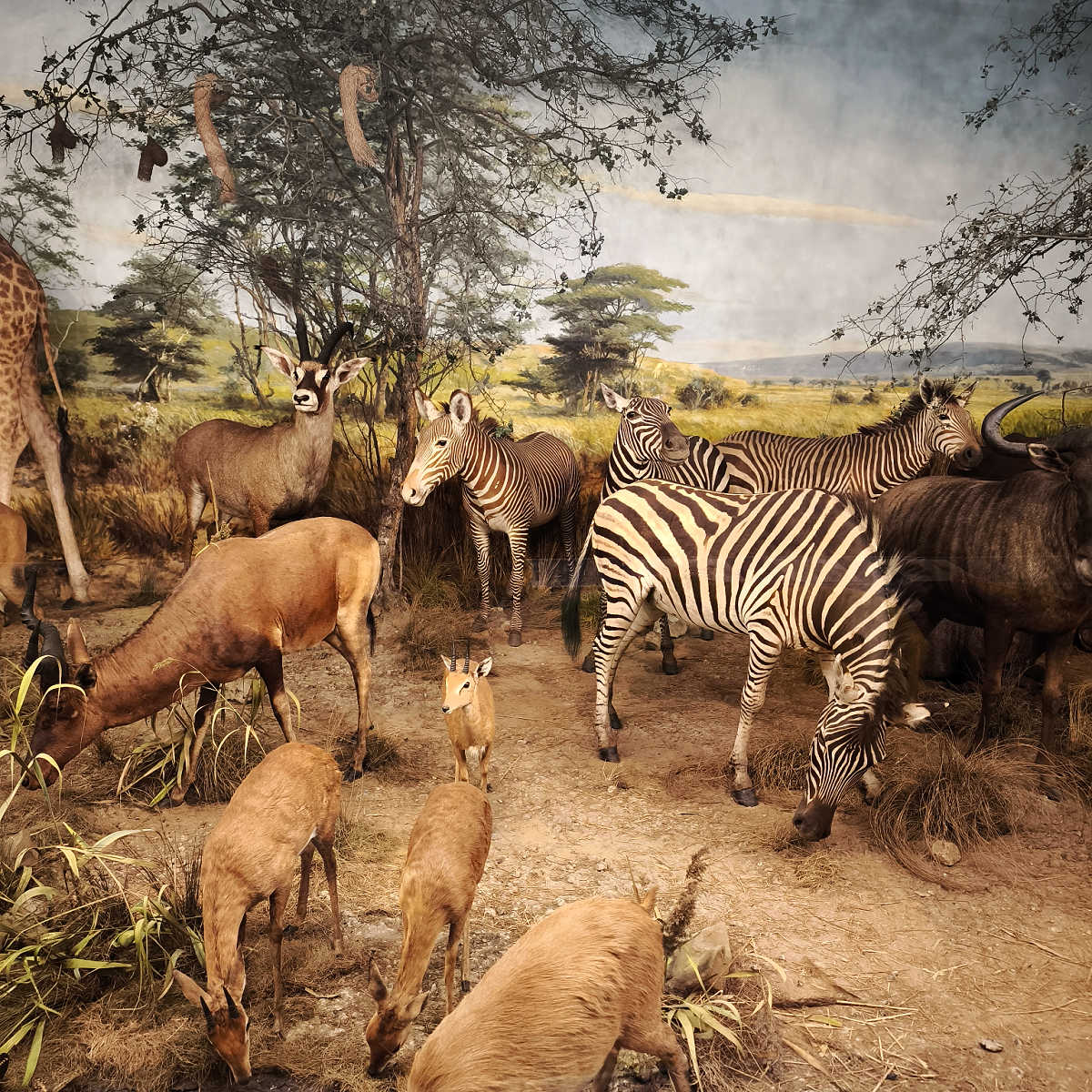
The dioramas are genuinely impressive. I know “stuffed animals” doesn’t sound exciting, but these aren’t your typical museum displays. Percy Powell-Cotton was a pioneer of the habitat diorama – he didn’t just collect specimens, he recreated entire scenes with incredible attention to detail.
You’ll see elephants, lions, zebras, and gorillas displayed in groups, in settings that show how they actually lived in the wild. Some of these dioramas date back to the 1900s, which makes them one of the oldest in the world, and they still look very live!
The ethnographic collections are fascinating and, refreshingly, the museum doesn’t shy away from the complex history of how these objects were collected. Percy Powell-Cotton and his daughters, Diana and Antoinette, gathered thousands of items during their travels – everything from ceremonial masks to everyday tools, textiles, and weapons.
Quex House itself is brilliant if you’re interested in how the other half lived. You can see the rooms pretty much as they were back in Victorian times. There’s something wonderfully eccentric about British country houses, and Quex doesn’t disappoint.
MORE MUSEUMS IN KENT
Is the Powell-Cotton Museum Worth Visiting?
Yes, absolutely – but it helps if you know what you’re getting.
It’s a traditional museum and if you’re genuinely interested in natural history, African and Asian cultures, or Victorian/Edwardian exploration, you’ll find this place absolutely riveting. I’ve spent hours here and could easily go back for more.
It’s also brilliant for children, particularly if they’re animal-mad. The dioramas are impressive enough to capture kids’ attention in a way that static displays often don’t. There are usually family-friendly activities and trails available too.
However, if you’re not particularly interested in natural history or ethnography, you might find it a bit specialist type of museum for you. This isn’t a theme park or an interactive experience – it’s a traditional museum, and it makes no apologies for that.
The value is excellent, though. For one ticket, you’re getting access to nine galleries packed with incredible objects, plus guided tour of the house and access to the gardens and parkland.
One thing worth mentioning: the museum is refreshingly honest about the colonial context of the collections. There’s thoughtful interpretation that acknowledges both the scientific value of the work and the problematic aspects of early 20th-century collecting practices.
MORE MUSEUMS & GALLERIES IN KENT
- Guildhall Museum of local history (Rochester) >>
- The Beaney House of Art & Knowledge (Canterbury) >>
History of Quex House and the Powell-Cotton Museum
Quex House has been standing here since at least 1449, when it was owned by John Quekes (hence the name “Quex” – it evolved from “Quekes House”). The Quekes family made their fortune in the wool trade, which was hugely profitable in medieval Kent.
The current house is a Regency building designed by architect Thomas Hardwick in 1816 for John Powell. It’s had various additions and modifications over the years, including two rather eccentric towers built at the request of the Powell family – one is a water tower, the other a memorial tower, and both are wonderfully Victorian in their ambition.
The Powell family evolved into the Powell-Cotton family through marriage, and it was Major Percy Horace Gordon Powell-Cotton (1866-1940) who transformed Quex from just another country estate into something extraordinary.
Percy was born into privilege but wasn’t content to just sit around managing his estate. He was an adventurer, making 28 expeditions to Africa and Asia between 1887 and 1939. He was an anthropologist (though he’d probably have just called himself a collector) and a photographer. His expeditions were serious scientific undertakings – he didn’t just shoot animals for sport; he documented habitats, collected botanical specimens, and gathered ethnographic material.
In 1896, Percy built the first gallery to display his growing animal collection. It started as a single room called “The Pavilion,” with one of the world’s first habitat dioramas – a group of Himalayan animals in a recreated mountain setting. It was groundbreaking at the time, and you can see it pretty much unchanged today.
As his collection grew, so did the museum. More galleries were added, each one designed to display specific regions or types of animals. By the time Percy died in 1940, he’d created one of the most significant private natural history collections in Britain.
I find it fascinating, that Percy’s daughters, Diana and Antoinette Powell-Cotton, didn’t just inherit the collection – they added to it in their own right. Between 1930 and 1936, they made three expeditions to Angola and Namibia, focusing specifically on collecting objects related to women’s lives and children’s experiences. This was genuinely pioneering anthropological work, and it’s one of the reasons the museum’s ethnographic collection is so comprehensive.
The museum opened to the public in 1896 and has been welcoming visitors ever since – that’s over 125 years of continuous public access, which is quite remarkable for a private collection. The Powell-Cotton family still owns Quex Park, though the museum is now run by a charitable trust.
MORE MUSEUMS & GALLERIES IN KENT

What You Can See at the Powell-Cotton Museum
The Diorama Galleries
These are the stars of the show. You’ll see large mammals – elephants, rhinoceros, lions, leopards, various antelope species, zebras, gorillas, and more – displayed in carefully constructed habitat scenes. The attention to detail is extraordinary: real plants, painted backgrounds that create depth, and animals posed in natural groupings.
The Indian Gallery features tigers, bears, and deer in Himalayan settings. The African galleries show savanna, forest, and mountain habitats. Some of these displays were created over a century ago, and they’re still stunning. The taxidermy is exceptional quality, and the overall effect is genuinely impressive.
The Ethnographic Galleries
These galleries display thousands of objects from Africa and Asia: masks, musical instruments, weapons, tools, textiles, ceremonial objects, and everyday items. There’s material from Congo, Angola, Ethiopia, India, China, Tibet, and more.
What makes this collection special is its breadth and the context in which it was collected. Percy Powell-Cotton didn’t just buy things from dealers; he collected them in the field, often documenting exactly where and how they were used. His daughters added significant material focusing on women’s and children’s lives, which is often underrepresented in ethnographic collections.
The displays are beautifully presented, with good interpretation that explains not just what things are, but how they were used and what they meant within their cultures.
Quex House
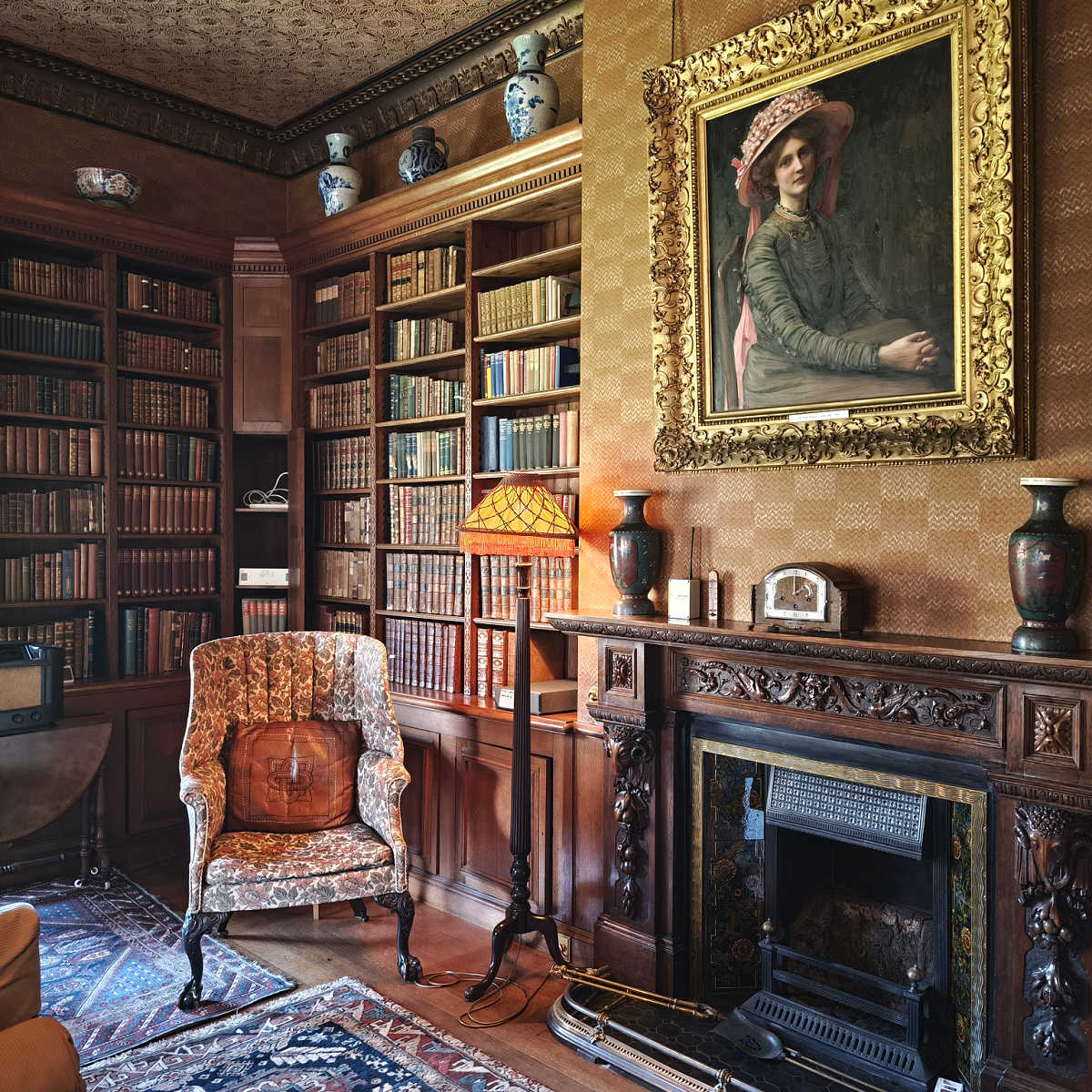
When it’s open (check the website for open days), you can tour parts of Quex House itself. You’ll see the family’s living rooms, the library (with over 7,000 books), the billiard room, and bedrooms, many still furnished as they were when the family lived there.
There are family portraits, furniture collected over generations, and all sorts of fascinating odds and ends. The house gives you a real sense of what life was like for a wealthy Edwardian family with a passion for collecting and travel.
The Gardens and Grounds
The gardens cover about seven acres and include woodland walks, a walled kitchen garden (being restored), lawns, and an ornamental fountain.
There are also two towers in the grounds – the Memorial Tower (built in memory of Percy’s uncle) and the Water Tower. You can’t normally go up them, but you can easily see them through the trees.
How Long to Allocate for Your Visit
I’d recommend allowing at least two hours for the museum and house. If you’re really interested in natural history or ethnography, you could easily spend longer. When I walk around the gardens and include coffee break at the tea room, I can easily spend an entire afternoon here.
The nine galleries are substantial, and if you actually read the labels and look properly at the displays (which I’d encourage – there’s so much detail), it takes time. Rushing through in 30 minutes would be a shame.
If you’re planning to visit Quex House as well (when it’s open), add another 45 minutes to an hour. And if you want to explore the gardens, have something to eat at the café, or browse the shop, you’re looking at a half-day visit quite easily. Plus don’t forget that the wider Quex Park (see my local tips below) has more attractions to keep you there for the whole day!
Practical Information for Visiting
Location
Powell-Cotton Museum, Quex Park, Birchington, Kent CT7 0BH
Opening Times
Seasonally from 14 February – 30 October
Wednesday to Sunday: 11:00am – 4:00pm (with Wednesday and Thursday being open only during school holidays only)
Closed: Monday and Tuesday (except Bank Holidays and special events)
Admission Prices
Adults: £9
Children (4-16): 7
Concessions (students, over 65, disabled visitors): £8
These are admission prices for Museum, House & Garden. Garden only tickets are £1.50-£2 cheaper. You can also purchase a yearly membership for £35 (1 adult with 1 child and additional child is £8 extra).
If you are member of the Historic Houses Association your entry is free.
Parking
Free parking on site, which is brilliant. There’s a large car park right near the museum entrance, and you don’t have to worry about paying or time limits.
Facilities
Toilets, including accessible toilets and baby changing facilities
Wheelchair access to most of the museum and gardens (some areas of Quex House aren’t accessible due to the historic nature of the building)
Museum shop with gifts, books, and locally made items
Picnic areas if you want to bring your own food
Café
There is a lovely little cafe just in front of the entrance to the house with indoor and outdoor seating.
Alternatively you can walk around the wider Quex park to find a Quex Barn, which is a farm shop and café that does really good homemade cakes, light lunches, and proper coffee. I’ve had lunch there several times, and it’s always been lovely.
During special events, there are sometimes additional pop-up food stalls too.
How to Get to Quex Park
By Car
The museum is easy to reach by car and well signposted once you’re in the area.
From London: Take the M2 towards Canterbury, then join the A299 (Thanet Way) towards Ramsgate/Margate. Exit at Birchington and follow the brown tourist signs to Quex Park. It’s about 75-90 minutes from central London, depending on traffic. The M2 is generally pretty good, though it can get busy during summer weekends when everyone’s heading to the coast.
From Canterbury: Take the A28 north towards Margate (about 20 minutes), then join the A299. Exit at Birchington and follow signs to Quex Park.
From Maidstone: Head east on the M20, then join the M2 towards Canterbury. Follow the A299 as above. It’s about 50 minutes.
From Dover: Take the A2 north, then join the A299 (Thanet Way) westbound towards Birchington. About 45 minutes.
Your sat nav will get you there easily with the postcode CT7 0BH. Once you’re in Birchington, look out for the brown heritage signs pointing to Quex Park and the Powell-Cotton Museum.
The best thing about driving here is the free parking right at the museum entrance – you don’t have to worry about finding a space or feeding meters, which makes the whole visit much more relaxed.
By Train
Getting here by train is actually quite straightforward, and I’d recommend it if you’re coming from London or anywhere along the Kent coast.
The nearest station is Birchington-on-Sea, which is only about a mile from Quex Park – roughly a 20-minute walk or a very short taxi ride.
Birchington-on-Sea has regular services on the Southeastern network:
From London: Direct trains run from London Victoria and London St Pancras International to Birchington-on-Sea. The journey takes about 1 hour 45 minutes to 2 hours, depending on which service you catch. Trains typically run every 30 minutes to an hour throughout the day.
From Canterbury: You can get to Birchington-on-Sea via either Canterbury East or Canterbury West, changing at either Ramsgate or Margate. The whole journey takes about 45 minutes to an hour.
From Margate or Ramsgate: Direct trains to Birchington-on-Sea take just 5-10 minutes. Perfect if you’re staying on the coast and want to explore inland a bit.
Walking from Birchington-on-Sea Station
When you come out of the station, turn right onto Station Road, then take the first left onto Park Lane. Follow Park Lane (which becomes Park Avenue) for about three-quarters of a mile until you reach Quex Park on your right. The whole walk takes about 20 minutes and it’s straightforward – you can’t really get lost. There are pavements the whole way, and it’s a pleasant enough walk through a residential area.
By Taxi from the Station
If you’d rather not walk, there’s usually a taxi rank at Birchington station, or you can book one in advance. It’s such a short journey (literally less than 5 minutes) that it shouldn’t cost more than £5-7. Local taxi firms include Academy Cars and Thanet Taxis.
By Bus
Several Stagecoach bus routes serve Birchington and stop near Quex Park:
Routes 8 and 8A run between Canterbury and Westgate-on-Sea via Birchington
Routes 32, 34, 36, and 38 connect various parts of Thanet with Birchington
Most buses stop at Birchington Square, which is about a 10-minute walk from Quex Park. From the square, head south on Park Lane/Park Avenue until you reach the museum entrance.
Bus services in this area can be a bit infrequent (particularly on Sundays and Bank Holidays), so I’d recommend checking the Stagecoach website or using the Traveline app to plan your journey in advance.
By Bicycle
If you’re cycling, Quex Park is accessible via National Cycle Route 15, which runs along the Kent coast. There are bike racks available at the museum, and the area around Birchington is reasonably flat, which makes for pleasant cycling.
From Margate, it’s about 3 miles (roughly 20 minutes by bike). From Westgate-on-Sea, it’s less than 2 miles. The roads around here aren’t too busy, though Park Lane can get a bit of traffic during peak times.
On Foot
If you’re staying in Birchington itself, Quex Park is an easy walk from anywhere in the village – it’s only a small place. From the seafront at Birchington Bay, it’s about a 25-30 minute walk inland.
There are also some nice walking routes from neighbouring villages like Westgate-on-Sea (about 2 miles) or Acol (1.5 miles), if you fancy a longer walk through the Thanet countryside before or after your museum visit.
What You Can See Nearby to Make It a Perfect Day Out
One of the brilliant things about Quex Park is that there’s quite a lot packed into the estate and immediate area, so you don’t need to drive anywhere else to make a proper day of it.
Felicity Cafe (on site)
Just outside the Quex House, there is a charming little tearoom that does traditional afternoon teas, sandwiches, homemade cakes, and hot drinks. It’s got a slightly more old-fashioned, tea-shop atmosphere than Quex Barn – think china teacups and cake stands. Perfect if you fancy treating yourself to a proper afternoon tea after exploring the museum.
More Attractions at Quex Park (on site)
Quex Park has really expanded over the years, and there’s now quite a lot happening on the estate beyond just the museum.
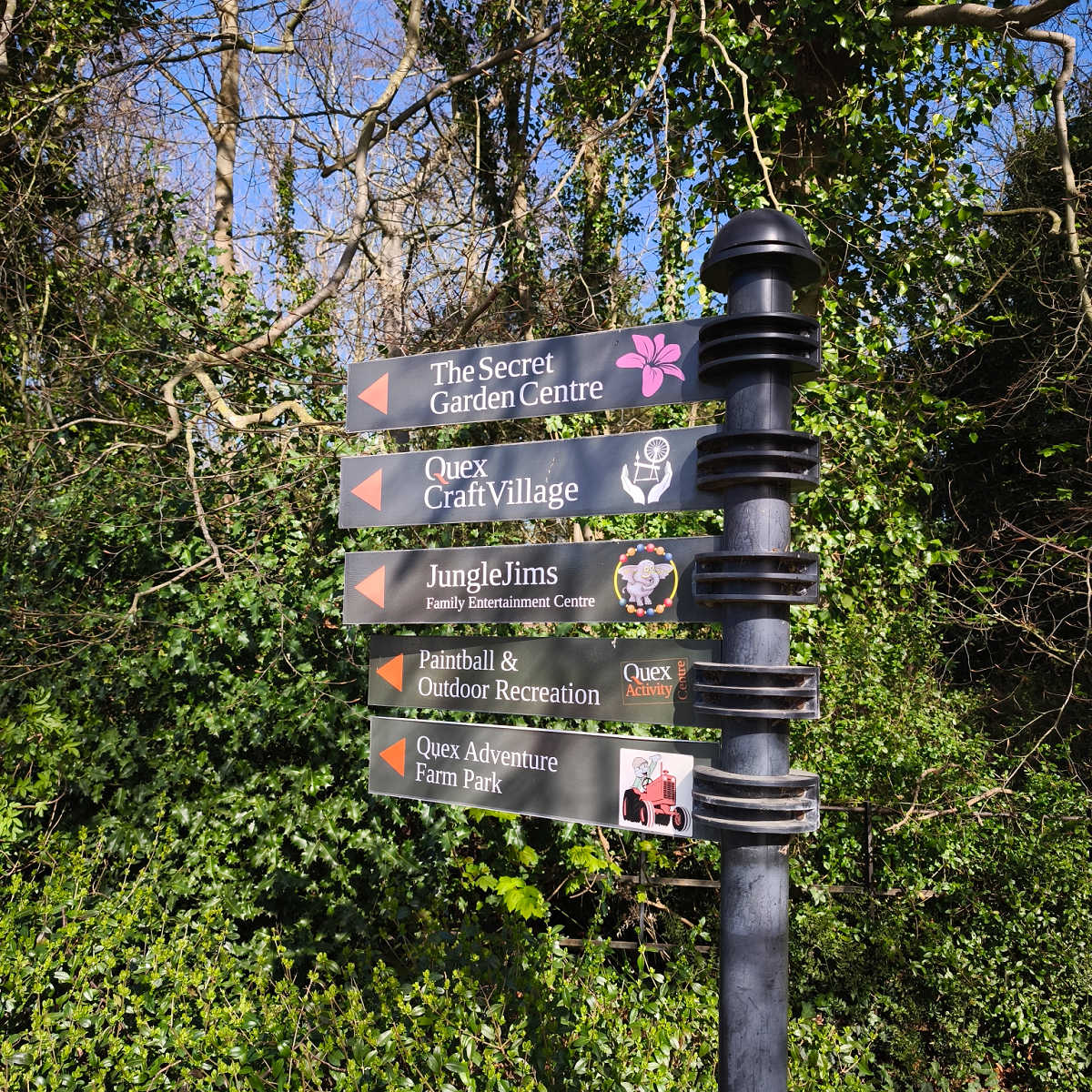
The Quex Activity Centre includes an indoor soft play area called “The Jungle,” which is brilliant if you’ve got young children who need to burn off some energy – it’s one of the largest soft play centers in Kent.
There’s also a small alpaca paddock where you can meet the resident alpacas (they’re ridiculously photogenic and very friendly).
The Garden Centre is well-stocked and popular with locals, selling plants, gardening supplies, and seasonal items.
And if you’re into crafts or looking for something handmade, the Craft Village has various independent makers and artists selling everything from pottery to jewelry, textiles, and woodwork. It’s worth a wander, especially if you’re looking for unique gifts.
Between all of this, the farm shop, the cafés, and the museum itself, you could genuinely spend an entire day at Quex Park without leaving the estate – which is pretty impressive for what was once just a private family home and collection.
Quex Barn Farm Shop and Café (on site)
This is right next to the museum, and it’s become a destination in its own right. Quex Barn is a proper farm shop selling local produce, seasonal fruit and veg, locally reared meat, cheeses, preserves, and all sorts of Kent-made goodies. If you’re self-catering or just want to take some nice things home, it’s worth a browse.
The café attached to the farm shop is excellent. They do homemade cakes (the carrot cake is particularly good), proper coffee, light lunches, sandwiches, and cream teas. The food is made with ingredients from the farm shop where possible, and it’s all very fresh and well-prepared. I’ve had lunch here several times after visiting the museum, and it’s always been lovely. The atmosphere is relaxed and welcoming, and there’s outdoor seating when the weather’s nice.
The Memorial Bell Tower (in the grounds)
You’ll spot this tower in the parkland – it’s quite hard to miss. It was built in 1819 as a memorial to John Powell by his widow. It houses a carillon of twelve bells that used to chime on the hour. You can’t normally go up it, but it’s an impressive structure and makes for good photos. This part of the park is usually used for events and last time when I went to the war time celebrations weekend, I was able to walk around the ground (so it’s worth keeping an eye out for any future dates).
The Water Tower (in the grounds)
The other tower at Quex is the Victorian water tower, which was built to supply the house and estate. Again, it’s not open to the public, but it’s a striking feature in the landscape and adds to the slightly quirky character of the place.
Quex Park Garden & Parkland
The wider parkland covers about 250 acres, with an additional 1,500 acres of farmland beyond that. You’re welcome to walk around the park (stick to the paths), and it’s lovely for a stroll. There are woodland areas, open grassland, and some nice views. It’s not a formal park with flowerbeds and benches, but if you want some fresh air and a gentle walk, it’s very pleasant.
The walled kitchen garden is gradually being restored, and depending on when you visit, there might be plants, vegetables, and flowers growing there. It’s a work in progress, but it’s interesting to see a Victorian kitchen garden coming back to life.
Birchington Village (half a mile)
The village itself is worth a quick wander. It’s a small, quiet place, but it’s got some nice independent shops, a couple of pubs, and a decent bakery. Birchington has been a settlement since Saxon times, and while it’s not as picture-postcard pretty as some Kent villages, it’s got character.
The village was popular with Victorian artists, and the Pre-Raphaelite painter Dante Gabriel Rossetti actually died here in 1882. He’s buried in the churchyard of All Saints Church, which is about a 10-minute walk from Quex Park. If you’re interested in Pre-Raphaelite art, it’s worth seeing – there’s a memorial window designed by Ford Madox Brown in the church.
All Saints Church, Birchington (half a mile)
Apart from the Rossetti connection, this is a pretty 13th-century church with some interesting features. The Rossetti memorial is in the south transept, and his grave in the churchyard has a Celtic cross designed by his friend Ford Madox Brown. There are often fresh flowers left there by admirers of his work.
The church itself is worth a look even if you’re not particularly interested in Rossetti – it’s got some nice medieval stonework and a peaceful atmosphere.
Minnis Bay (1.5 miles)
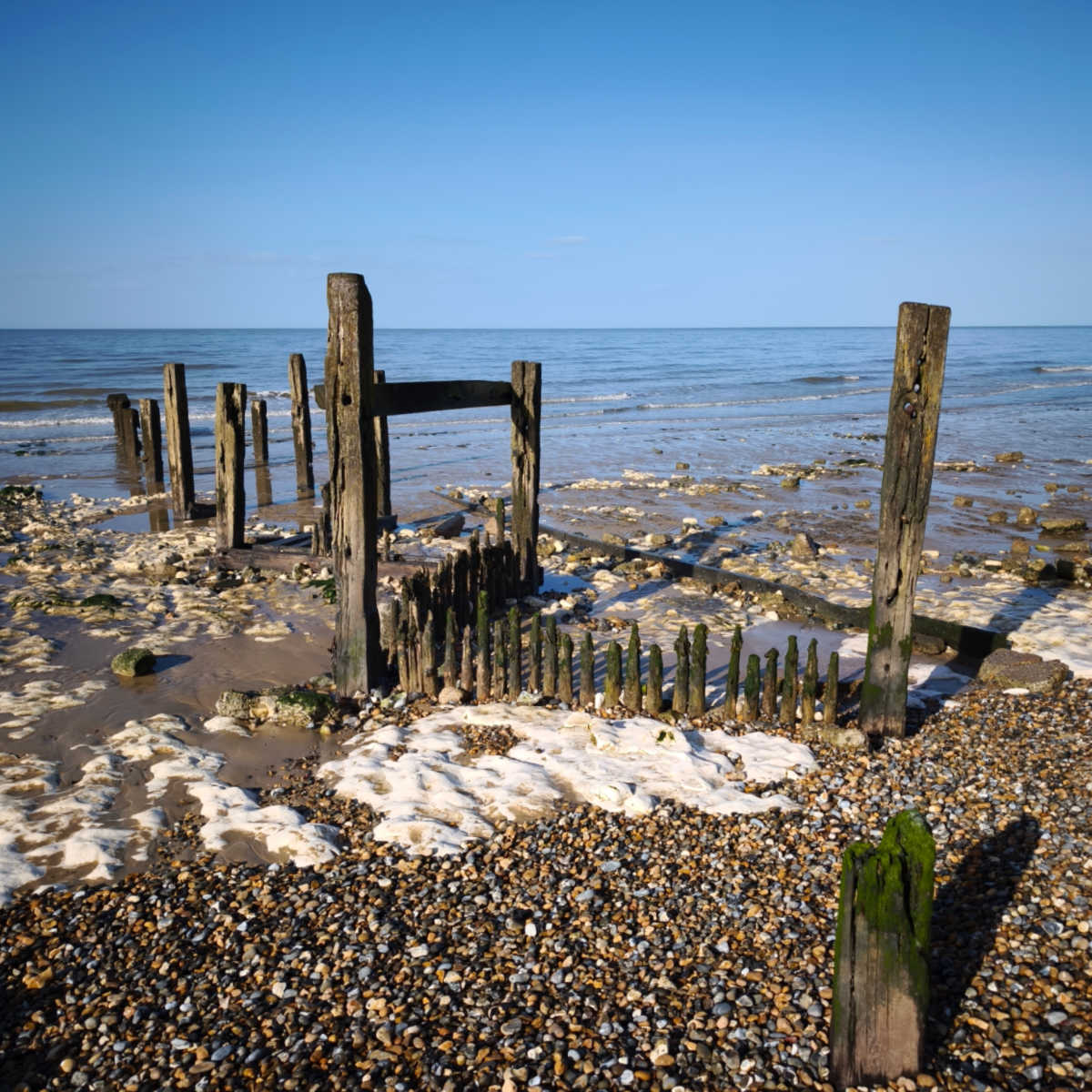
If you fancy some seaside after all that history and culture, Minnis Bay is only about 1.5 miles from Quex Park – a five-minute drive or a half-hour walk. It’s a lovely sandy beach that’s popular with families, with rock pools at low tide, good swimming, and some of the best sunsets on the Thanet coast.
There’s a café right on the beach (Minnis Bay Bar & Brasserie), beach huts, and usually an ice cream van in summer. It’s not commercialized or overdeveloped – just a nice, old-fashioned British beach. If you’re visiting with children, this is the perfect way to round off the day.
The beach stretches for miles at low tide, and you can walk along the coastal path in either direction. It’s particularly nice in the early evening when the day-trippers have gone home.
Westgate-on-Sea (2 miles)
Just along the coast from Birchington, Westgate is another pleasant seaside town with a nice beach, a promenade, and some grand Victorian houses. It’s got a genteel, slightly old-fashioned atmosphere – this was where wealthy Victorians came for healthy sea air.
The beach here is sandy with some rock pools, and there are gardens along the seafront. There are several cafés and pubs, including the Bake & Alehouse, which does excellent pizza if you’re after something more substantial than afternoon tea.
Spitfire and Hurricane Memorial Museum (4 miles)
Just down the road at Manston, this is an absolute must if you’re interested in wartime history or aviation. The museum is dedicated to the RAF squadrons that flew from Manston during the Battle of Britain. You’ll see a Spitfire and Hurricane (obviously), along with artifacts, photographs, and personal stories from the pilots who flew from here.
Manston was right in the thick of it during 1940 – the airfield was bombed repeatedly, and the pilots based here were flying multiple sorties a day during the height of the battle. The museum is run entirely by volunteers, and you can tell it’s a real labor of love. Entry is free (donations welcome), and it’s only about a 10-minute drive from Quex Park.
This blog post was originally published on 10 March 2026 and last updated on 10 March 2026


